A clogged ear isn’t always caused by earwax, and an earache doesn’t necessarily mean you have an infection. Pressure changes, trapped fluid, inflammation, and even problems with your jaw can affect how your ears feel. Sometimes the discomfort is mild, while other times it can interfere with hearing, sleeping, or everyday activities.
The difference between ear pressure and ear pain can offer useful clues about what’s happening. A blocked sensation accompanied by muffled hearing may have a different cause than sharp pain, drainage, or tenderness around the ear. Some conditions resolve naturally, while others require medical evaluation and treatment.
Why Does Your Ear Feel Clogged?
A clogged sensation often develops when something interferes with normal pressure regulation or sound transmission inside the ear. Your Eustachian tubes connect the middle ears to the back of your throat, helping equalize air pressure and drain fluid. When these tubes become swollen or blocked, you may experience fullness, popping, or muffled hearing.
This condition, called Eustachian tube dysfunction, frequently develops during a cold, sinus infection, or seasonal allergies. It can also occur when air pressure changes, such as during air travel. In many cases, the pressure improves as congestion and inflammation decrease.
What Are the Most Common Causes of Ear Pain and Pressure?
Several conditions can produce similar symptoms, but the location of the problem often determines the type of discomfort you experience.
Earwax Buildup
Earwax protects the ear canal by trapping dirt and helping prevent irritation. However, excessive earwax can accumulate and create a blockage, resulting in pressure, muffled hearing, ringing, or discomfort.
Using cotton swabs inside the ear can make the problem worse by pushing wax deeper into the canal. If wax becomes impacted, a healthcare provider can determine whether removal is necessary and which method is appropriate.
Middle Ear Infections
A middle ear infection, also called otitis media, develops when fluid and inflammation affect the space behind the eardrum. These infections often follow a cold or another upper respiratory illness and are particularly common in children.
Symptoms may include ear pain, fever, reduced hearing, and difficulty sleeping. According to the CDC, some middle ear infections improve without antibiotics, while others require prescription treatment depending on their severity and duration.
Swimmer’s Ear
Swimmer’s ear affects the outer ear canal rather than the middle ear. It commonly develops when moisture remains in the ear canal, creating an environment where bacteria can grow.
Pain that worsens when you gently pull the outer ear or press the small flap near the ear canal is a common sign. Itching, swelling, redness, and drainage may also occur. Treatment frequently involves prescription ear drops to address the infection.
Can Sinus Problems or Jaw Pain Affect Your Ears?
Ear discomfort doesn’t always begin inside the ear itself. Sinus congestion and allergies can cause swelling near the Eustachian tubes, preventing pressure from equalizing normally. This may create a plugged sensation without an actual blockage in the ear canal.
Temporomandibular joint (TMJ) disorders can also cause pain around the ears. Because the jaw joint sits directly in front of each ear, inflammation or muscle tension can produce discomfort that resembles an earache. Pain that increases while chewing or opening your mouth may suggest a jaw-related cause.
What Do Different Ear Symptoms Mean?
The way your ear feels can help narrow down possible causes, although symptoms alone aren’t enough to make a diagnosis.
- Fullness with muffled hearing: May suggest earwax buildup, fluid behind the eardrum, or Eustachian tube dysfunction.
- Sharp or throbbing pain: Can occur with middle ear infections, pressure changes, or inflammation.
- Pain when touching the outer ear: Often associated with swimmer’s ear.
- Popping or clicking: Common when the Eustachian tubes are having difficulty regulating pressure.
- Fluid draining from the ear: May indicate an infection or perforated eardrum.
- Pain when chewing: Could involve the jaw joint or a dental problem.
- Ringing in the ears: May accompany earwax blockage, pressure changes, or hearing-related conditions.
Persistent symptoms should be evaluated rather than assuming the cause based on a single symptom.
How Can You Relieve Mild Ear Pressure at Home?
Mild ear fullness related to congestion or temporary pressure changes may improve without medical treatment. However, home remedies should be gentle, particularly when you don’t know whether the problem involves an infection or eardrum injury.
Some approaches that may help include:
- Swallowing or yawning: These movements can help the Eustachian tubes open and equalize pressure.
- Applying a warm compress: Gentle warmth against the outside of the ear may relieve mild discomfort.
- Using saline nasal spray: This may help with nasal congestion contributing to ear pressure.
- Taking appropriate pain medication: Over-the-counter medications such as acetaminophen or ibuprofen may reduce discomfort when used as directed.
- Keeping your ears dry: Avoid additional moisture if you suspect an outer ear infection.
Avoid inserting cotton swabs, hairpins, or other objects into your ear canal. Ear candles are also unsafe and ineffective for wax removal. Don’t use ear drops or attempt ear irrigation if you have drainage, a suspected perforated eardrum, or ear tubes unless a healthcare provider advises you to do so.
When Should Ear Pain Be Checked by a Medical Provider?
Mild ear pressure may improve within a short period, particularly when associated with temporary congestion. However, persistent or worsening pain can indicate an infection or another condition requiring treatment.
Seek medical evaluation if you experience:
- Ear pain that continues beyond two to three days.
- Fever accompanying an earache.
- Fluid, pus, or blood draining from the ear.
- Reduced hearing that doesn’t improve.
- Increasing pain or swelling around the ear.
- Repeated ear infections or persistent ear pressure.
Sudden hearing loss requires immediate medical evaluation, even without pain. Severe dizziness, facial weakness, or swelling and redness behind the ear also warrant urgent assessment. Infants younger than three months with a fever of 100.4°F or higher need immediate medical attention.
How Is Ear Pain Diagnosed and Treated?
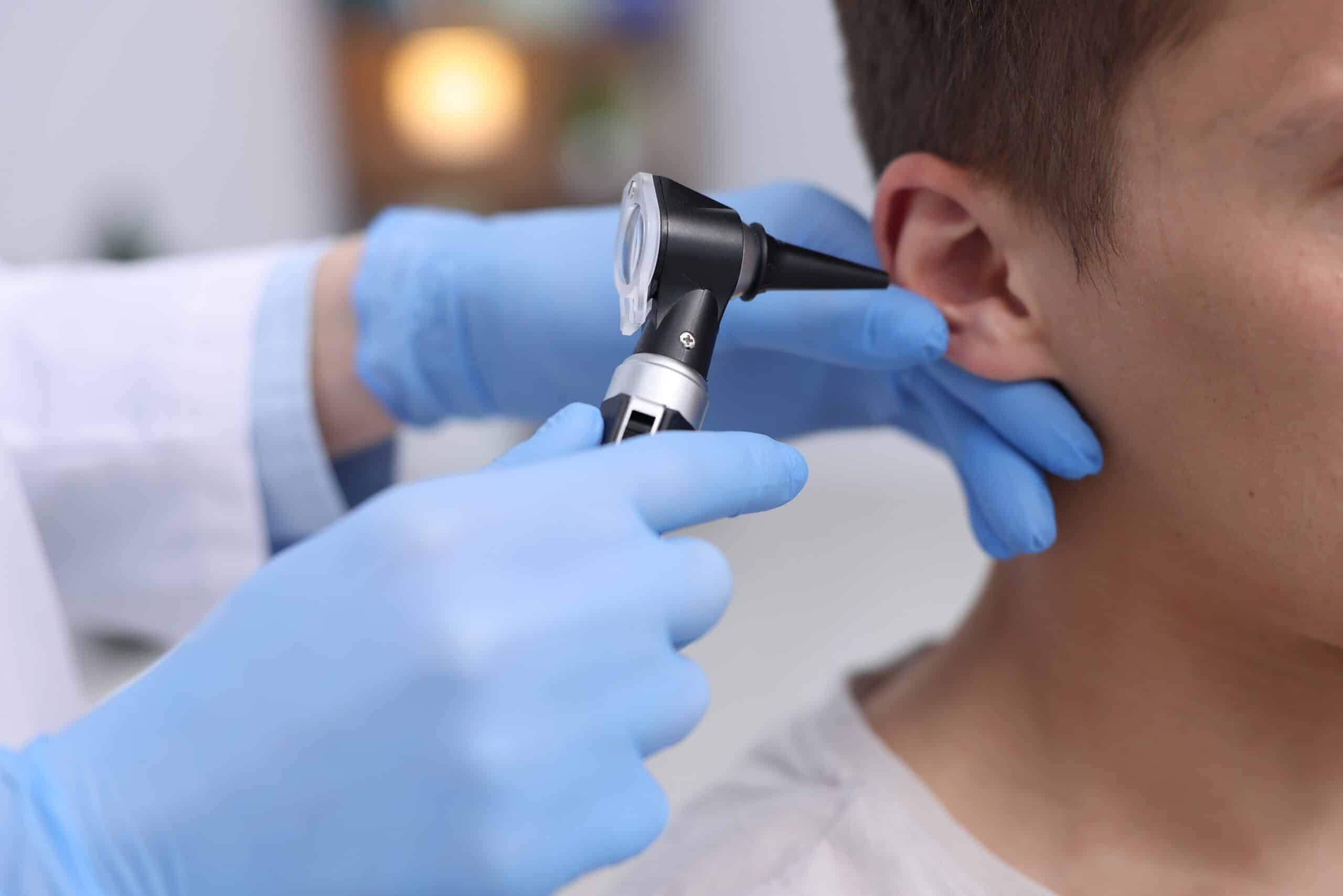
A healthcare provider will generally examine the ear canal and eardrum using an otoscope, a small instrument with a light. They’ll also ask about your symptoms, recent illnesses, swimming, allergies, and any changes in hearing.
Treatment depends on the underlying cause. Earwax blockages may require professional removal, while swimmer’s ear often responds to medicated ear drops. Some middle ear infections require antibiotics, while others can be monitored with appropriate symptom management. Identifying the source of the discomfort helps avoid unnecessary medications or treatments that could worsen the condition.
Where Can You Get Ear Pain Treatment in Trinity at Starkey Ranch?
TGH Urgent Care powered by Fast Track provides ear pain treatment in Trinity at Starkey Ranch for non-life-threatening conditions, including ear infections and other common causes of ear discomfort.
Our Trinity at Starkey Ranch Urgent Care location is at 13531 State Road 54, Odessa, FL 33556, in Starkey Ranch Town Square. Nearby businesses include Publix Super Market at Starkey Ranch Town Square, The UPS Store, and E Sushi, making the clinic easy to locate along State Road 54.
The clinic is open seven days a week from 8:00 a.m. to 8:00 p.m. Walk-in visits are welcome, and Save My Spot e-Check-in is available. Get directions here to our Trinity at Starkey Ranch location.
Get Ear Pain Relief at TGH Urgent Care powered by Fast Track
Persistent ear pain, muffled hearing, or a feeling of fullness can make everyday activities uncomfortable, especially when symptoms continue without improvement. Whether the cause is an ear infection, earwax buildup, or pressure behind the eardrum, identifying the problem is important for finding the right treatment.
At TGH Urgent Care powered by Fast Track, our board-certified medical professionals provide ear pain treatment in Trinity at Starkey Ranch for a variety of non-emergency conditions. Visit our Trinity at Starkey Ranch urgent care clinic for a walk-in evaluation. You can also complete your patient forms electronically through Save My Spot e-Check-In before arriving to help speed up the check-in process.
Disclaimer
The blogs presented by TGH Urgent care in partnership with Fast Track are not a replacement for medical care and are exclusively intended for educational purposes. The content provided here should not be construed as medical guidance. If you are encountering any symptoms, we strongly recommend that you consult a qualified healthcare provider. If you are experiencing a life-threatening emergency call 911.